


In the event that you’re uncertain of your intelligence level, don’t overreact: There’s a fast method for finding out. In this article, we’ll see intelligence level tests for the two kids and grown-ups. You’ll likewise figure out how to work on your scores. While the level of intelligence tests is ordinarily used to survey an individual’s overall knowledge, they don’t quantify the full scope of human insight. Furthermore, they have many blemishes.
The Impact of Irresistible Diseases on Intelligence
For instance, the level of intelligence scores can be impacted by specific irresistible sicknesses. These sicknesses remove the energy required for mental health. Individuals who had intestinal sickness, for instance, had lower intelligence level scores. A concentrate in the US showed major areas of strength between more significant levels of irresistible illness and lower test scores. In spite of the fact that it’s not authoritative, the discoveries are as yet worth considering. Here are a few justifications for why irresistible illness has a course on your typical intelligence level.
The Role of Intelligence Tests in Academic Achievement
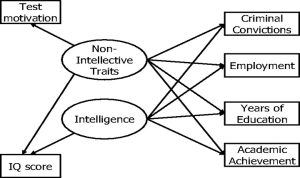
Albeit the consequences of level of intelligence tests are significant in foreseeing future scholastic achievement, a high level of intelligence isn’t an assurance of progress throughout everyday life. Numerous fruitful individuals have intelligence levels higher than normal. It’s vital to keep the level of intelligence the test brings about setting with your youngster’s general turn of events and advancing necessities. By keeping the outcomes in context, you can arrive at an educated conclusion about what kind of training your kid needs. While settling on a conclusion about whether to enlist them in school, you’ll know which understudies need additional assistance.
Understanding the Complexity of Intelligence
Knowledge is a mind-boggling idea. The typical intelligence level is around 100. In any case, this typical score might differ from one country to another. The level of intelligence scores of every individual might vary by a few. The standard deviation for a test, for instance, is frequently higher than normal. Truth be told, you might have sequential levels of intelligence than others in your age bunch. Thus, while an intelligence level test is as yet an extraordinary method for deciding an individual’s true capacity for progress, it doesn’t ensure that an individual will prevail at it.
The Influence of Age on Intelligence
Age is another significant element. The typical level of intelligence for kids under 18 is 99. Conversely, grown-ups somewhere in the range of 20 and 34 are more like 100. As individuals age, their levels of intelligence start to rise once more. At 44 and 55, the normal intelligence level for grown-ups is 101 or more. This recommends that individuals with a higher level of intelligence than normal are bound to find success in their picked professions. It’s vital to take note that this number is still below the normal level of intelligence for more youthful individuals.
There are different levels of intelligence scoring frameworks used to gauge an individual’s level of intelligence. Most intelligence-level tests utilize a 100-point scale for the typical score. A deviation of 15 focuses from this figure makes a typical conveyance bend. Roughly the vast majority of the populace falls within two standard deviations of the typical score. Scores under 70 may show a learning handicap. Furthermore, scores more than 130 may demonstrate a singular’s skill.
The Intersection of Intelligence and Social Factors
In spite of the contention encompassing the connection between race and level of intelligence, there are a few normal factors that influence the level of intelligence scores. Those with admittance to training, great well-being, and scholarly foundations will generally be keener than individuals without it. Besides, training and great nourishment add to a sound mind and body. Furthermore, obviously, a quiet, safe climate is crucial for mental execution. Culture assumes a significant part in advancing interest, forming learning, and seeing reality. Luckily, admittance to instruction, immunizations, and nourishing practices have become progressively all-inclusive.